
Overview
Self-service kiosks demand displays that combine responsive touch interaction with rugged durability for 24/7 public use. AplusLCD kiosk display solutions feature projected capacitive (PCAP) multi-touch technology, IP65-rated sealed front panels, and optical bonding for superior outdoor readability. Our displays power ticketing machines, airport check-in kiosks, hotel self-service terminals, retail information kiosks, and outdoor wayfinding systems, processing millions of touch interactions daily in retail, travel, and hospitality environments across 50+ countries.
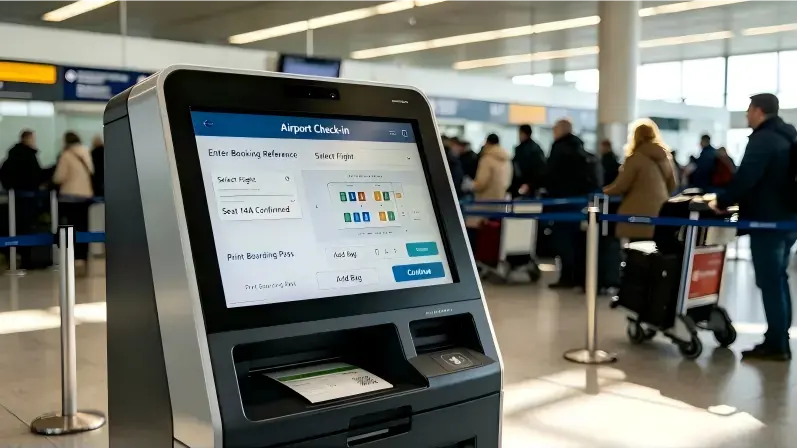
Common Self-Service Kiosk Display Problems — and How We Specify Around Them
What we specify: Specify 1000-2000 cd/m² with optical bonding and anti-glare or anti-reflective cover glass. Optical bonding removes the internal air-gap reflection that still makes a high-nit panel look washed out at midday.
What we specify: PCAP with water-droplet rejection and glove-touch mode, behind IP65 front sealing with gasket mounting so moisture stays out of the cabinet instead of pooling between panel and glass.
What we specify: High-TNI panels rated -30°C to 80°C plus redesigned thermal management — aluminium heatsink, airflow channels and a low-power backlight driver. That combination is what ended blackouts across a 15.6" outdoor kiosk fleet.
What we specify: Tempered cover glass with an IK-rated build and a fully sealed bezel. Custom bezel colours and silk-screen logo printing keep the branding intact while the glass takes the abuse.
What we specify: We match bezel dimensions, mounting brackets, cable routing and cutout to your kiosk drawing. There is no MOQ, so the first unit can be a single evaluation build tested in the real enclosure before volume release.
Touch Technology for Public Kiosks
Our kiosk displays utilize projected capacitive (PCAP) touch technology supporting up to 10 simultaneous touch points. The touch controller features advanced noise rejection algorithms for reliable operation near EMI sources, automatic calibration that compensates for environmental changes, and glove-touch capability for outdoor and healthcare applications. The touch sensor is integrated behind a protective glass layer, providing durability against scratches, impacts, and chemical cleaning agents.
IP65 Sealed Protection
For outdoor and high-traffic indoor kiosks, protection against dust and moisture is critical. Our IP65-rated display solutions feature a fully sealed front panel with gasket mounting, preventing dust ingress and water jets from damaging internal electronics. The sealed design also simplifies cleaning and sanitation — essential for healthcare, food service, and public transportation kiosks.
Optical Performance & Readability
Kiosk displays must remain readable in varying lighting conditions. We offer optical bonding that eliminates the air gap between LCD panel and touch sensor, reducing internal reflections by over 80%. Combined with anti-glare surface treatments and brightness options up to 2000 cd/m², our displays deliver crisp, high-contrast images even under direct sunlight or bright indoor lighting typical of retail and transportation environments.
Kiosk Displays for Solar / PV Monitoring Stations
Solar and PV monitoring stations run unattended — on rooftops, across solar farms and along transmission corridors — so the kiosk display has to stay readable and online with no technician standing next to it. Those sites define three requirements. Outdoor high brightness first: 1000 to 2000 cd/m² with optical bonding and anti-glare or anti-reflective cover glass keeps generation, inverter and string-level data legible in direct sun instead of washing out. Wide temperature second: -30°C to 80°C operation with high-TNI panels holds contrast in desert and tropical heat, the usual failure mode of commercial monitors, while IP65 front sealing keeps dust, rain and overnight condensation out of the cabinet. Remote monitoring third: because these stations report over SCADA, Modbus or 4G gateways, we keep HDMI, VGA and LVDS input, RS-232/485, USB and wide-input DC power on the interface list so the display fits solar-powered cabinets rather than fighting them.
High Brightness Monitor Guide — 800-4000 nits for sunlight-readable outdoor kiosksSelection Parameters — What to Specify for Self-Service Kiosk
| Parameter | Specification |
|---|---|
| Screen Size | 8" to 55" 10.1"-32" covers ticketing, check-in and self-ordering; 43"-55" for wayfinding and information walls. |
| Resolution | 800×600 to 3840×2160 1920×1080 is the practical minimum for text-heavy check-in flows; 4K only pays off under 1 m viewing distance. |
| Brightness | 250 to 4000 cd/m² 250-500 cd/m² indoors; 1000-1500 for glass-front and semi-outdoor; 2000+ with optical bonding where the screen faces direct sun. |
| Touch Technology | PCAP 10-point multi-touch Enable water-droplet rejection and glove mode for outdoor or gloved operation; resistive only for simple button-press interfaces. |
| Ingress Protection | IP65 front sealed Treat IP65 front sealing as the minimum for any unstaffed or outdoor kiosk — specify gasket mounting and drainage with it. |
| Operating Temperature | -20°C to 70°C Specify -30°C to 80°C high-TNI for desert and tropical sites, where ambient heat — not sunlight alone — is what blacks out the panel. |
| Optical Bonding | Available (reduces reflection 80%+) Specify bonding whenever the kiosk faces a window or open sky: it cuts internal reflection by 80%+ and stops condensation fogging between panel and glass. |
Which AplusLCD Display Fits Your Self-Service Kiosk Project?
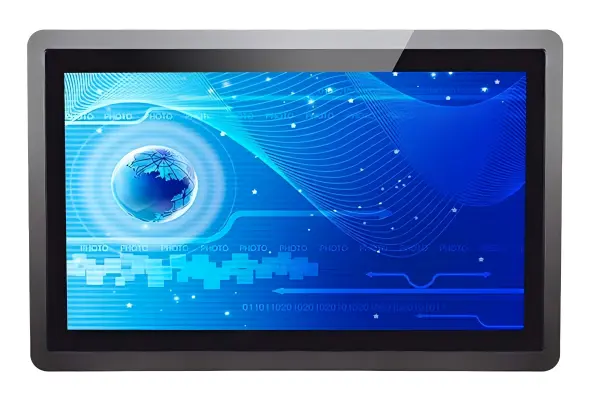
IP65 aluminium front bezel, 7" to 43", 10-point touch with water-droplet and glove rejection — the default choice for indoor and covered kiosks.
View models & specifications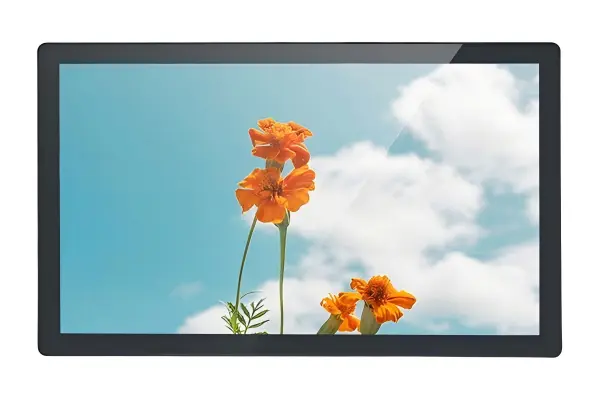
800-3000 nits for glass-front, semi-outdoor and drive-up kiosks. Add optical bonding and AR/AG cover glass where the screen faces direct sun.
View models & specifications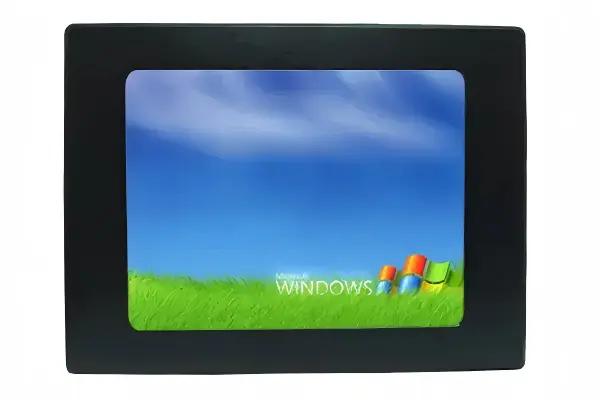
Front-sealed bezel clamps into the kiosk cutout — dust-tight and washdown-safe, 8.4" to 24", for transport, food service and healthcare terminals.
View models & specificationsThe technology guides behind these specifications
Not sure which of these fits your self-service kiosk project? Send size, brightness, mounting method and site environment — our engineers return a configured quotation with pricing and lead time within 24–48 hours.
Request a QuoteApplications
Related Industry Applications
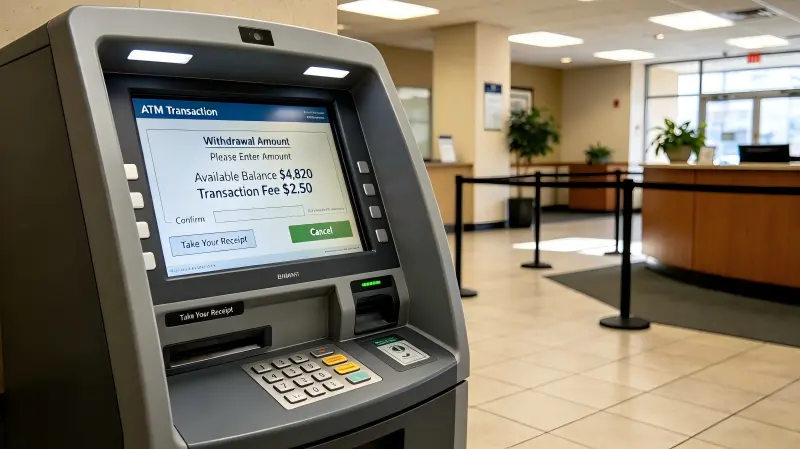
High-reliability replacement and upgrade monitors for ATM machines compatible with NCR 5684/5685/5884/5885/5870/5886/5887 and Wincor 5005L. Drop-in fit, long-term supply, vandal-resistant design.
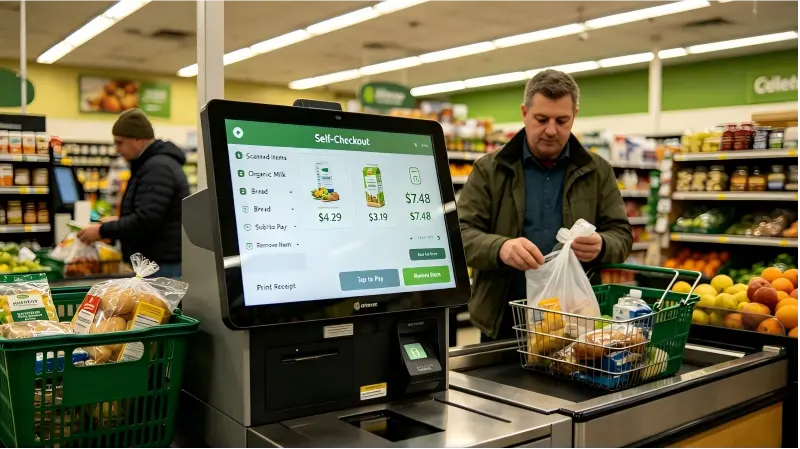
Slim, reliable display solutions for point-of-sale terminals, customer-facing screens, electronic shelf labels and retail digital signage. Android or Windows platform support.
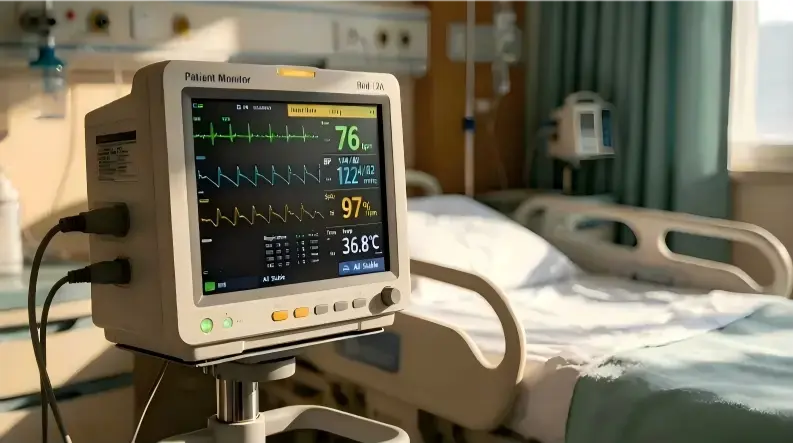
Flat, seamless touch displays suitable for medical workstations, patient monitoring equipment and clinical information systems. Easy to disinfect, edge-to-edge glass surface.
Frequently Asked Questions
Can your kiosk displays work in outdoor environments?
Yes. Our IP65-sealed PCAP touch displays are designed for outdoor kiosks with operating temperatures from -20°C to 70°C, sunlight-readable brightness up to 2000 cd/m², and optical bonding to eliminate condensation issues.
Do you support custom bezel and logo designs for kiosk displays?
Absolutely. We offer OEM/ODM services including custom bezel colors, silk-screen logo printing, custom mounting brackets, and tailored cable routing to match your kiosk enclosure design.
What is the typical lead time for custom kiosk display orders?
Standard configured displays ship within 2-4 weeks. Custom designs with unique bezels, mounting, or interface configurations typically require 6-8 weeks including engineering review and prototype approval. Rush orders can be accommodated for urgent project timelines.
PCAP vs Resistive touch — which should I choose for my kiosk?
PCAP touch offers multi-touch gestures, superior optical clarity, and a more responsive user experience — ideal for modern public-facing kiosks. Resistive touch works with gloved hands and any stylus and is more cost-effective for simple button-press interfaces. We recommend PCAP for most kiosk applications unless glove operation without conductive gloves is a hard requirement.
What display do you recommend for solar and PV monitoring station kiosks?
For solar and PV monitoring stations we specify 1000-2000 cd/m² sunlight-readable displays with optical bonding and anti-glare or anti-reflective cover glass, IP65 front sealing, and -30°C to 80°C wide-temperature operation. High-TNI panels are chosen for desert and tropical solar farms, where high ambient heat — not sunlight alone — is the main cause of image blackout. Touch and non-touch versions are available with HDMI, VGA, DVI or LVDS input, RS-232/485 and USB for SCADA, Modbus and 4G gateways, plus wide-input DC power for solar-powered cabinets. Send your site ambient temperature, mounting method and interface list and we will return a configured quotation, including a single evaluation unit for pilot sites.
Can I order a single kiosk display for evaluation before a rollout?
Yes — there is no MOQ. Most kiosk programmes start with one evaluation unit built to the production specification, tested in the real enclosure under real lighting, before scaling to volume once the design is signed off.
What information do you need to quote a kiosk display?
Size, target brightness, whether the site is indoor, outdoor or glass-front, touch or display-only, the mounting method, and the enclosure cutout drawing. With those six items our engineers return a configured quotation with lead time; custom bezels, brackets and branding are quoted in the same response.